



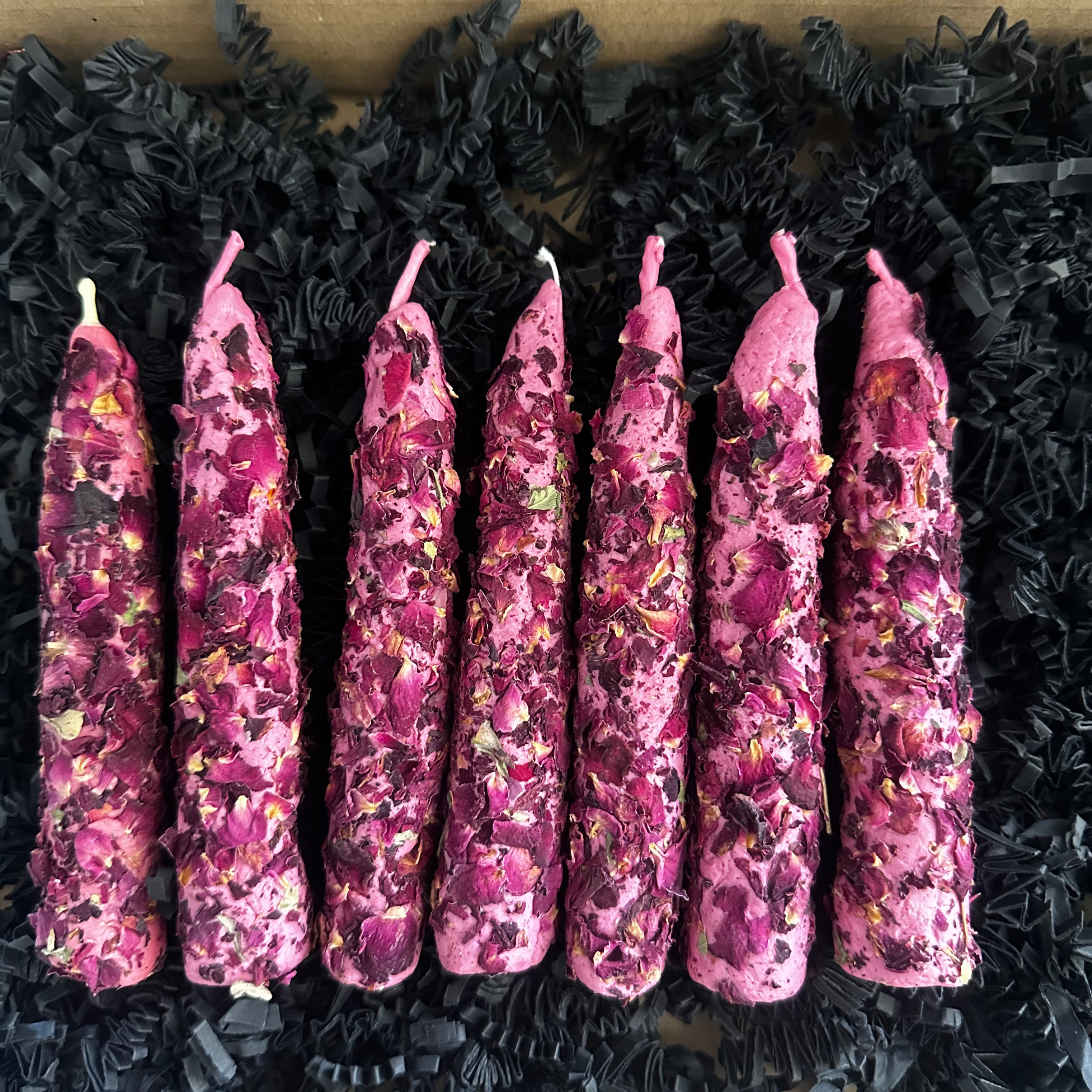
An intention candle is more than a source of light or a decorative object. It is a ritual candle created around a specific purpose, such as protection, cleansing, self-love, prosperity, transformation, new beginnings or spiritual connection.
The colour, shape, herbs, crystals and symbols are carefully chosen to support one central intention. When the candle is lit, these elements come together in a personal ritual that helps direct attention towards what you want to invite, strengthen, change or release.
What Is an Intention Candle?
An intention candle is a candle designed for focused ritual or spiritual practice. In some traditions, it may also be called a “programmed candle”, meaning that a particular purpose has been placed at the centre of its creation.
The word “programmed” does not refer to a technical process. It describes the intention represented by the candle and its materials.
Unlike an ordinary candle, an intention candle carries a clear symbolic theme. Every detail contributes to that theme, from the colour of the beeswax to the herbs, stones, shape and decorative symbols.
The candle becomes a physical expression of an intention that might otherwise remain only a thought.
The Meaning Behind the Materials
The materials used in handmade ritual candles are chosen not only for their beauty, but also for their traditional and symbolic associations.
Natural Beeswax
Beeswax has been used in candles for centuries and is traditionally associated with warmth, natural purity, stability and transformation.
As the candle burns, solid wax becomes liquid and is transformed into light and heat. This natural process makes beeswax a meaningful material for rituals connected with change, renewal and personal growth.
Candle Colours
Colour creates the emotional and symbolic foundation of an intention candle.
Green is often associated with prosperity, growth and new opportunities.
Red may represent passion, courage, vitality and love.
White is traditionally connected with clarity, purification and new beginnings.
Black is often used for protection, personal boundaries, closure and releasing unwanted influences.
Blue may symbolise calm, intuition, communication and spiritual protection.
Purple is commonly associated with inner wisdom, spiritual practice and transformation.
Colour meanings can vary between traditions, so the most important consideration is whether the symbolism feels meaningful to the person using the candle.
Herbs and Botanical Elements
Herbs may be selected for their traditional symbolism, natural fragrance and connection to the candle’s purpose.
Rosemary is often associated with cleansing and protection, lavender with peace and harmony, mint with prosperity and movement, and rose petals with love and emotional openness.
Botanical elements should always be used carefully and in suitable quantities, as excessive dried material near the flame can affect the way a candle burns.
Crystals and Symbols
Crystals, keys, moons, serpents, hearts, protective signs and other details give the candle’s intention a visible form.
A key may represent access, knowledge or the opening of a new path. A serpent may symbolise transformation and renewal. A heart may express love, emotional healing or self-acceptance, while a tree may represent ancestry, roots and inner strength.
These symbols do not have to mean exactly the same thing to everyone. Their purpose is to create a meaningful connection between the candle and the intention behind it.
How Do Intention Candles Work?
Within spiritual and esoteric traditions, the flame is often viewed as a symbol of transformation and a point through which an intention is released or activated.
The candle also creates a dedicated moment for focused attention. Watching the flame, repeating an intention and engaging with the candle’s colour, scent and symbolism can help separate the ritual from the distractions of everyday life.
In this way, an intention candle brings together three important elements:
a clearly defined purpose;
a symbolic object connected with that purpose;
the conscious participation of the person performing the ritual.
An intention candle does not remove the need for personal decisions or practical action. Instead, it can help create focus, strengthen commitment and mark the beginning or completion of an important inner process.
Common Types of Intention Candles
Intention candles can be created for many different spiritual and personal purposes.
Protection candles are used in rituals connected with grounding, personal boundaries and the creation of a protected space.
Cleansing candles may accompany practices focused on releasing stagnant energy, leaving the past behind and preparing for a new beginning.
Prosperity candles are associated with growth, work, creativity, abundance and openness to new opportunities.
Love and self-love candles may support emotional openness, self-acceptance, harmony and conscious relationships without attempting to control another person’s free will.
Transformation candles are often chosen during periods of change, personal development or transition from one stage of life to another.
Intuition and spiritual candles may be used for meditation, altar work, lunar rituals or connection with personal symbols and spiritual traditions.
How to Use an Intention Candle
A candle ritual does not need to be complicated. What matters most is a clear intention, your attention and safe use of the candle.
1. Define Your Intention
Choose one central purpose and express it in a clear, first-person statement.
For example:
“I release what no longer supports me and open myself to new possibilities.”
2. Prepare the Space
Place the candle on a stable, heat-resistant surface away from draughts and flammable objects.
You may place a written intention, crystal or meaningful personal symbol nearby.
3. Light the Candle
Take a few calm breaths and focus on your chosen intention. You may repeat it aloud, write it down or simply hold it quietly in your mind while watching the flame.
4. Connect Intention with Action
Consider one practical step that can support your intention after the ritual. This might be creating a plan, beginning a project, having an important conversation or establishing a personal boundary.
5. Close the Ritual
When the ritual feels complete, extinguish the candle safely unless it is specifically designed to burn fully in one session.
Larger ritual candles may be relit during several practices when permitted by the candle maker’s instructions.
Essential Candle Safety
An intention candle is still an open flame and must always be used responsibly.
Never leave a burning candle unattended.
Place it on a stable, heat-resistant holder or surface.
Keep it away from children, animals, curtains, paper and other flammable materials.
Trim the wick according to the candle maker’s instructions.
Remove decorative elements if they interfere with safe burning or if the care instructions advise you to do so.
Never extinguish hot wax with water.
A Ritual Made Meaningful by You
An intention candle gives a personal purpose a visible and symbolic form. Its materials create the language of the ritual, but your attention and participation give that ritual personal meaning.
Whether used for protection, cleansing, prosperity, love, transformation or spiritual practice, the candle becomes a point of focus — a deliberate moment in which you acknowledge what you are ready to welcome, strengthen or release.
Explore the Karmalita collection of handmade beeswax intention candles and choose the symbols that reflect your path and purpose.
Add comment